







Search Results for: Red Cup Day

Starbucks Red Cup Day Erupts in Massive Strike: Thousands of Employees Protest, Union Calls It the Largest in History
On November 16, 2023, Starbucks' annual "Red Cup Day," thousands of employees at more than 200 stores across the United States went on strike. Organizers called it the largest labor action since the founding of Starbucks Workers United. Employees chose to strike during this peak ordering period, aiming to disrupt operations as much as possible and draw public attention. Behind the strike lies baristas' long-standing dissatisfaction with understaffing, overloaded orders, and the company's refusal to listen to their opinions. Starbucks officially responded that the union refused to schedule negotiation meetings. This one-day strike had limited impact on sales, but the public opinion fallout is worth watching. [more…]

Starbucks red cup distribution standards vary: some get them for free while others who buy more are denied, global users call for fair treatment
Every November, Starbucks red cups arrive as scheduled, becoming a tacit year-end ritual between fans and the brand. However, this year's Red Cup Day sparked controversy due to inconsistent execution standards across stores: some locations handed out the limited-edition cups freely and at random, while others imposed strict limits, refusing to give an extra cup even if you bought an additional drink. This left rule-abiding customers confused and feeling unfairly treated, and users back in China also called on the brand to treat everyone equally worldwide. This article takes you through the distribution chaos and customer sentiment behind this year's red cups. [more…]

Starbucks workers at a hundred stores stage a coordinated Red Cup Day strike: dispute over pay and staffing escalates
Employees at more than 100 Starbucks stores across the United States held a joint strike on the annual Red Cup Day, demanding higher wages and improved staffing. This strike, the largest in the union's history, pushed Starbucks to the forefront of labor relations. As a coffee chain giant with more than 32,000 stores worldwide, Starbucks claims that its pay and benefits lead the industry while facing the dual pressure of a sharp decline in net profit and growing employee dissatisfaction. This article will sort through the course of the strike, Starbucks' global layout and latest financial report data, and analyze the deeper reasons behind the pay dispute, providing coffee lovers with a complete observation of the事件. [more…]

Over a thousand unionized Starbucks workers launch an indefinite strike, affecting 65 stores in more than 40 cities across the United States.
Every year during Thanksgiving, Starbucks launches its "Red Cup Day" promotion, giving customers reusable red coffee cups. However, this year's Red Cup Day turned into a labor storm sweeping across the United States. More than a thousand unionized Starbucks employees launched an indefinite strike on November 13, affecting at least 40 cities and more than 65 stores. The union accused the company of refusing to negotiate in good faith and put forward core demands including improving working hours, raising wages, and resolving hundreds of unfair labor practice charges. Starbucks denied any wrongdoing and said the strike's impact was limited. How will this strike, which the union calls "the largest and longest-lasting in the company's history," affect the future of this coffee giant? [more…]

Luckin × Genshin Impact Collaboration Hits a Snag on Day One: Random Character Cups Spark Outrage, Baristas Plead for Mercy
This Monday, Luckin Coffee's collaboration with the hit game Genshin Impact officially launched, with a themed pop-up store opening simultaneously in Ningbo. The event introduced two new drinks—Fontaine Red Wine Americano and Freshly Brewed Fontaine Ceylon Light Milk Tea—along with 8 themed cups, 4 limited-edition paper bags, 2 cup sleeves, and merchandise such as stickers, keychains, and character standees. However, problems arose on the first day: many players found that the drink cups they received did not match the characters on the posters, with the same new drink inexplicably paired with the same themed cup; users in Guangzhou also encountered a system issue that prevented them from ordering the light milk tea. Consumers' disappointment and employees' grievances clashed fiercely on social media. Why did a highly anticipated collaboration turn into a complaint fest? [more…]
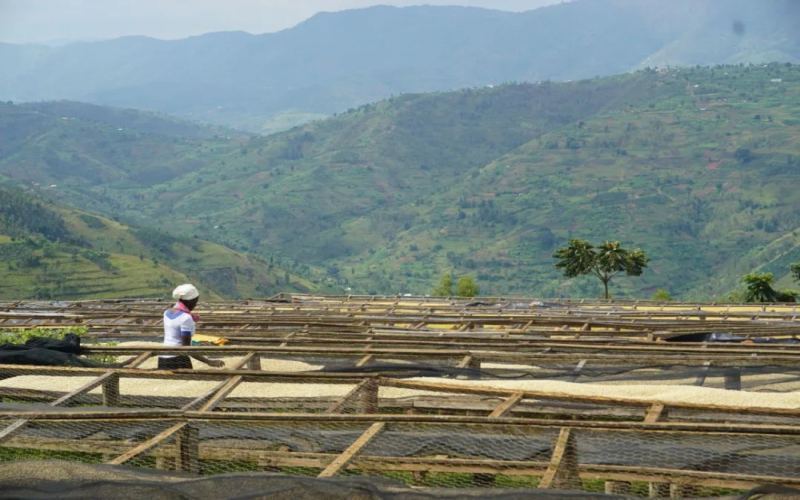
Ethiopian Guji Hambela Coffee: Cup Flavors Achieved Through High-Altitude Terroir and Meticulous Natural Processing
Ethiopia is a globally important coffee-producing country, and coffee exports occupy a key position in its economy. Located in the Guji production area, the town of Hambela, with its high altitude, red-brown soil, and large temperature difference between day and night, nurtures coffee with a unique flavor. The local area uses fine sun-drying processing, combined with African raised-bed drying and strict manual hand sorting, allowing the coffee cherries to develop rich layers through a slow fermentation lasting up to 21 days. Front Street Huakui is precisely a representative bean from this production area, attracting attention for its notes of floral fragrance, jackfruit, dried fruit, and apricot. This article will review the background of Ethiopian coffee exports, take a deeper look at Hambela's terroir and processing techniques, and sort out the origin and market performance of Huakui coffee beans. [more…]

Why Has Coffee Become the Daytime Wine of Adults? A Flavor Journey from Instant to Pour-Over
Once, when we were young, we watched adults swirl red wine glasses and thought it looked incredibly cool; only after growing up did we understand that holding a cup of brown coffee is the everyday comfort. Coffee has long since evolved from a mere tool for staying awake into an essential drink for adults, whether for socializing or for solitude during the day. This article will take you into the world of coffee, discussing why coffee is jokingly called the office worker's life-extending water, and the history of taste evolution from instant coffee to pour-over. Whether you're a wordsmith or a coffee enthusiast, you'll find something to resonate with. [more…]
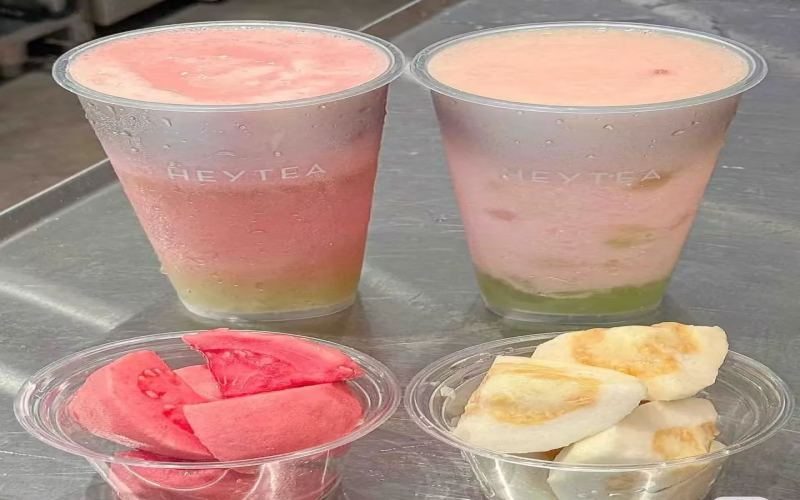
HEYTEA Guava Series Ingredient Change: After Red Guava's Curtain Call, White Guava Takes Over, Sweetness Sparks Heated Debate
As April draws to a close, the supply season for red-fleshed guava is coming to an end, and the seasonal guava fruit tea series featuring red-fleshed guava under HEYTEA is also facing discontinuation. However, fan enthusiasm has not waned, and the company immediately announced that it would replace red-fleshed guava with white guava, allowing the two limited-edition drinks "Refreshing Guava Grape" and "Refreshing Guava Jelly" to continue being sold. On the day the new products launched, HEYTEA offered a buy-one-get-one-free promotion, triggering a surge in store orders and noticeably longer waiting times for consumers. The new version of the drinks still has a pale pink appearance, but feedback on the taste is polarized: some people feel there is little difference from the old version, while others report that the sweetness is too high and the guava flavor has become weaker. Industry insiders point out that white guava and red-fleshed guava are inherently different in sweetness and flavor, and combined with adjustments to other ingredients in the formula, differences between the new and old versions are unavoidable. [more…]
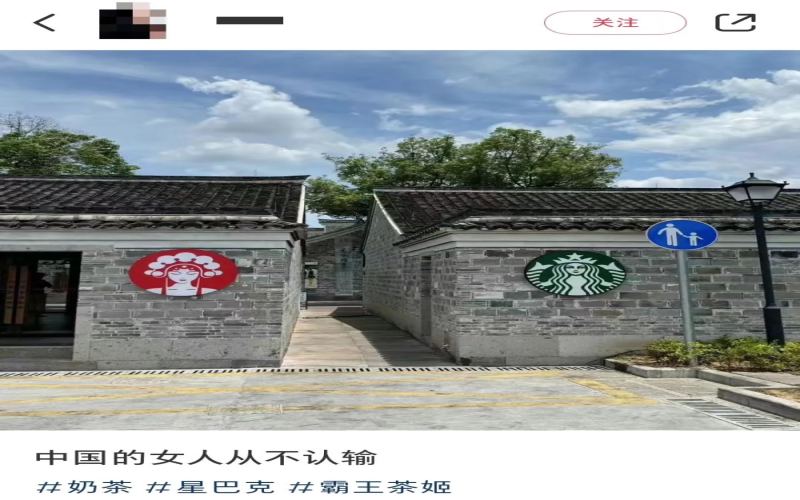
Chagee and Starbucks unexpectedly paired up as a CP due to their storefronts, and the red-and-green color scheme was jokingly called a public toilet commercial war by netizens, observes Front Street Coffee.
When the red songstress meets the green mermaid, a wave of online revelry sparked by a coincidence in signage placement unfolds. Chagee and Starbucks—one sells tea, the other coffee—were playfully paired as a red-and-green couple by netizens at an alley entrance in Cicheng Ancient Town, Ningbo. From jokes about "Chinese women's restroom vs. foreign women's restroom," to Chagee setting sales targets against Starbucks on International Tea Day, and to the insomnia meme triggered by the caffeine content response for "Wanli Mulan," these two major brands keep colliding both offline in the same frame and online in trending topics. Front Street Coffee walks you through the fun and the real rivalry behind this "public restroom commercial war." [more…]
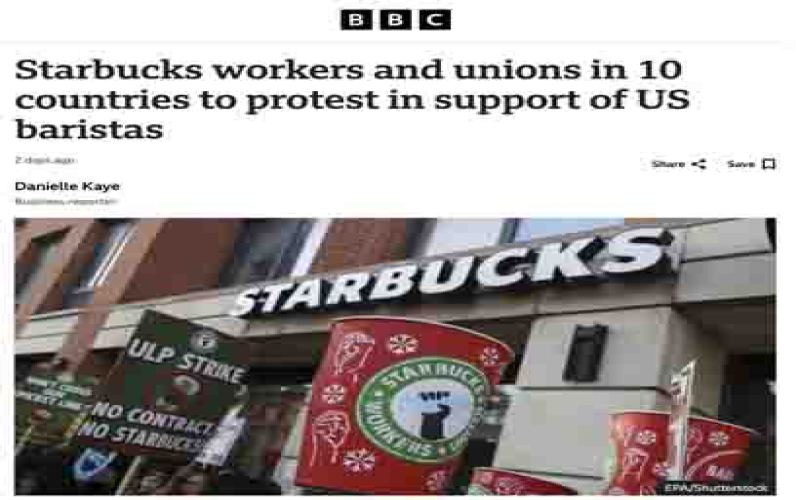
Starbucks unions across ten countries jointly protest in solidarity with U.S. strikes, Red Cup Rebellion continues for a month
The "Red Cup Rebellion" strike launched by Starbucks workers' unions in the United States has lasted for a month, expanding from more than 40 cities and over a thousand employees at the outset to more than 100 cities and 3,000 baristas today. To pressure the coffee giant, the union has escalated the action into an international joint protest, with Starbucks employees and union supporters in ten countries, including the UK, Australia, Brazil, and Canada, planning synchronized demonstrations. Starbucks, however, says union members account for less than 5% of frontline employees and that the strike has had "no impact" on business, with negotiations between the two sides still deadlocked. Where will this labor-management battle go? [more…]
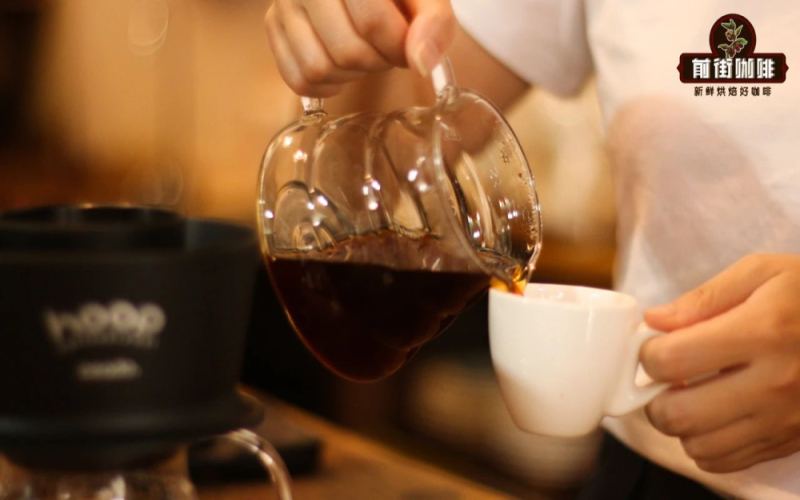
Yunnan Red Honey Process SOE Coffee Flavor Analysis and Comprehensive Introduction to Its Taste Characteristics
Luckin Coffee recently completed its procurement plan for 1,000 tons of Yunnan specialty coffee beans for the 2020/2021 harvest season. The selected green beans come from the two major producing regions of Baoshan and Pu'er, both grown at altitudes above 1,300 meters, with SCA scores of no less than 80 points. This marks another move by Luckin into the specialty coffee segment, following the Little Black Cup SOE Yirgacheffe. This batch of Yunnan beans uses a double anaerobic fermentation red honey process, going through two anaerobic fermentation stages from fresh fruit to drying, with the fermentation rhythm controlled by monitoring color, aroma, pH value, and sugar content. This article will systematically review the producing region conditions and main variety characteristics of Yunnan coffee, and provide an in-depth analysis of the classification, process, and flavor performance of the honey processing method, helping coffee enthusiasts fully understand the true taste and quality characteristics of Yunnan red honey processed SOE. [more…]
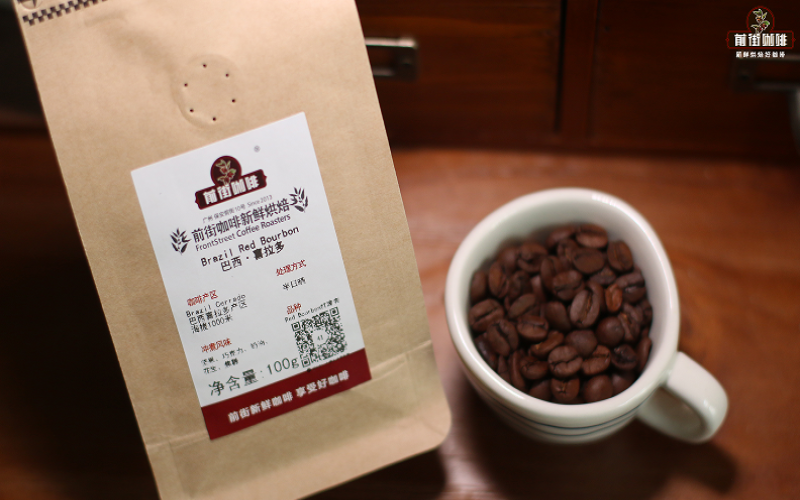
Drip Bag Varieties | What is the brewing method for Brazilian Red Bourbon drip bag coffee? What are the key points for brewing filter-style drip bag coffee packs? Drip bag coffee brand recommendations
Nowadays, more and more people have developed the habit of drinking coffee every day. But for those who don't work at a coffee shop, how can they enjoy coffee anytime? That's when the baristas at Front Street Coffee (FrontStreet Coffee) brought out drip coffee bags! Today, Front Street is here to share Front Street Coffee (F [more…]
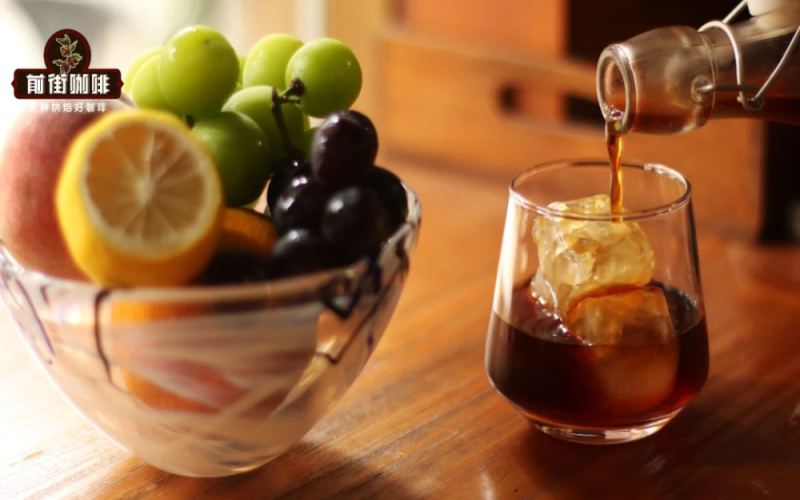
A Bean Selection Guide for Cold Drip and Cold Brew: Can Brazil Cerrado Red Bourbon Handle Iced Coffee?
When making cold brew or iced drip coffee, the choice of beans is often more critical than the technique. This article begins with the essential differences between cold brew and Americano, traces the history of cold brew coffee from Dutch sailors to Starbucks' promotion, and offers Front Street Coffee's recommended cold brew ratios and storage suggestions. It also focuses on the Cerrado region of Brazil, analyzing the flavor performance of semi-washed Red Bourbon and answering the core question of whether it is suitable for making iced coffee. [more…]

A Complete Guide to Pour-Over Coffee for Beginners: From Equipment Preparation to Three-Stage Extraction—Are Kenyan and Other Coffee Beans Suitable for Pour-Over?
Brewing a pot of aromatic coffee for yourself and your family in the early morning not only refreshes the mind but also injects a beautiful start into the day. Pour-over coffee and brewing Gongfu tea share similar principles: different bean varieties require matching water temperatures, equipment, and timing. Compared with machine brewing, pour-over techniques allow more precise control of water temperature and flow, restoring the coffee beans' original flavors and allowing flexible adjustment according to personal taste preferences. The brewing process itself is also a form of cultivation, helping people become calm and focused, and it is also convenient for entertaining guests and making friends. This article will sort out the entry points for pour-over beginners: which coffee beans are suitable for pour-over, what basic equipment needs to be prepared, the specific operation of three-stage extraction, and the flavor performance of Emerald Red Label Geisha, helping you brew a good cup of coffee that belongs to you. [more…]
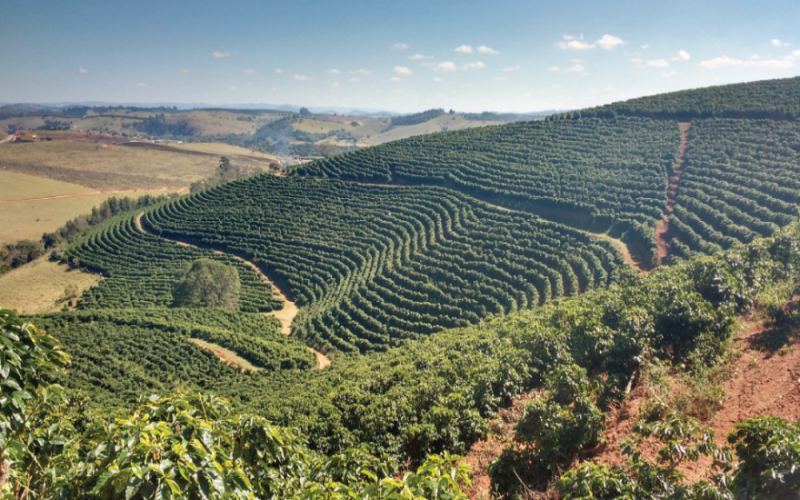
Why Is Red Bourbon the Main Variety of Brazilian Coffee? An Analysis of the Genetic Secret Behind Yellow Bourbon Fruit Not Turning Red
Brazil, as a major coffee-producing country in the world, has a rather fascinating history of variety evolution. From the early cultivation of Typica to the introduction of Bourbon, and then to the divergence of Red Bourbon and Yellow Bourbon, multiple factors are involved, including yield, disease resistance, and genetics. This article sorts out the trajectory of coffee variety replacement in Brazil, focusing on answering why Yellow Bourbon does not turn red after ripening but instead maintains its yellow appearance, and analyzing the dominant and recessive inheritance mechanisms of its anthocyanins and luteolin. At the same time, it introduces the flavor characteristics and brewing performance of Front Street Coffee's entry-level selected Brazil Red Bourbon and Front Street Coffee's Queen Estate Yellow Bourbon, helping coffee enthusiasts understand the differences these two Bourbon varieties present in the cup. [more…]
Central America vs. South America Coffee Flavor Comparison: Panama, Colombia, Costa Rica, Brazil, and Honduras Famous Regions Explained
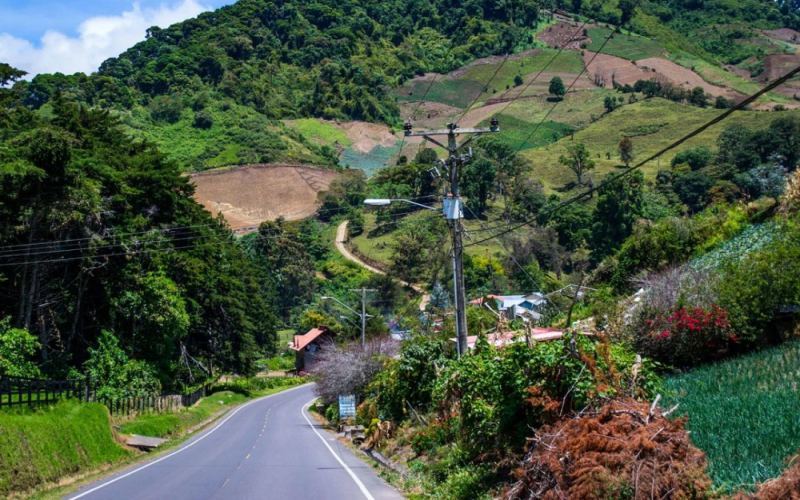
Central and South America are the core regions of the global specialty coffee world. Central American coffees are mostly grown in high mountain areas at elevations of 1,600 to 1,700 meters, where the significant temperature difference between day and night lengthens the fruit ripening cycle, which in turn increases bean density, and the cup profile often shows soft acidity, good cleanliness, and medium body. Through cupping, Front Street Coffee has found that the flavor differences among producing countries are quite distinct. This article will examine one by one the coffee characteristics of five well-known producing countries: Panama, Colombia, Costa Rica, Brazil, and Honduras, covering their main producing regions, elevation conditions, representative estates, and cupping performance, and will also include information on several representative coffee beans currently sold by Front Street Coffee along with brewing flavor descriptions, providing coffee lovers with a complete reference on regional flavors. [more…]
MStand's woven bag is jokingly called a vegetable basket, and moms are rushing to claim it as their grocery shopping gear.
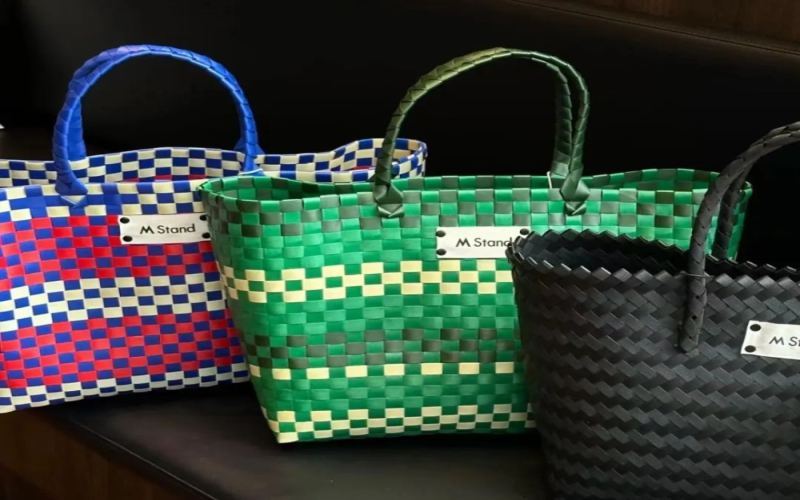
The chain coffee brand MStand recently launched a new product, Blackberry Sparkling Americano, and simultaneously released three woven bags for everyday outings, in pure black, green-white, and red-blue colorways, which quickly sparked a buying frenzy among fans. However, this merch, with its surprisingly large capacity and stylish looks, went viral online because its appearance closely resembles the grocery baskets commonly used by elders, and many moms have directly commandeered it as everyday shopping gear. This article walks you through how this merch campaign works, real feedback from netizens, and the material issues to consider before buying. [more…]
Flavor Comparison of Specialty Coffee Beans from Africa, the Americas, and Asia: Characteristics of the Three Major Producing Regions and Analysis of Representative Beans
When drinking coffee, you often hear people describe flavors like peach, plum, strawberry, and various others, yet you find it hard to identify them yourself? In fact, this isn't a sign of a dull palate—it's simply that everyone's cultural background and dietary experiences differ, so the same cup of coffee naturally evokes different associations for each person. The joy of coffee tasting lies precisely in sharing these different impressions. This article will guide you through Africa, Central and South America, and Asia, examining the flavor characteristics of specialty coffee beans from these three major origins one by one. With the help of several representative beans from Front Street Coffee—Ethiopia Huakui, Kenya Sika AA, Costa Rica Honey Process, Guatemala Miraflores Estate, and Lintong Mandheling—you'll get a concrete sense of each region's unique charm. [more…]
A Complete Analysis of Ethiopian Coffee Flavors: From Regional Terroir to the Cup Differences Between Yirgacheffe and Sidamo
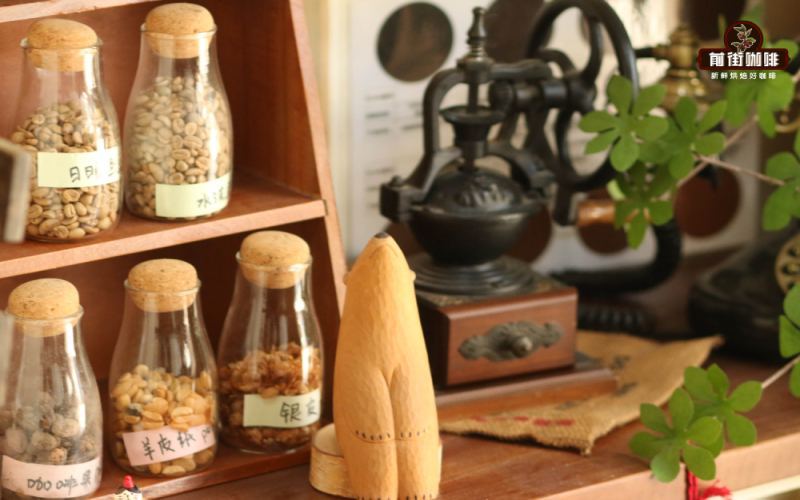
Ethiopia, the birthplace of Arabica coffee, nurtures strikingly diverse flavor profiles thanks to its varied terrain and climate. From the intense berry notes of Sidamo to the fresh white floral aromas of Yirgacheffe, the differences among regions and processing methods are what drive coffee lovers to keep exploring. This article will outline the flavor characteristics of Ethiopia's main producing regions, review the rise to fame of the Huakui coffee beans, and introduce in detail the Gudingding and Red Cherry, two Yirgacheffe offerings from Front Street Coffee's everyday drinking series, along with practical pour-over parameter recommendations to help readers understand the appeal of Ethiopian coffee more systematically. [more…]
From Coffee Cherry to Cup: Coffee Cherry Structure Diagram and Full Analysis of Green Bean Processing Workflow
Many people drink coffee every day, yet have never seen what a coffee fruit actually looks like. Coffee cherries resemble cherries, turning red when ripe, and their internal structure determines the final form of the coffee bean. This article uses anatomical diagrams to show in detail the exocarp, pectin layer, endocarp, silver skin, and seed of the coffee fruit, and traces the complete chain from harvesting, washing or drying, roasting, to extraction. It also introduces the distribution characteristics of the global coffee belt, as well as the basic differences among the three major native species: Arabica, Robusta, and Liberica. The article also recommends related products from Front Street Coffee, helping enthusiasts understand more intuitively the transformation of coffee from fruit to cup. [more…]